Introduction:
Isaiah 25:6-9 NAS 6 And the LORD of hosts will prepare a lavish banquet for all peoples on this mountain; A banquet of aged wine, choice pieces with marrow, And refined, aged wine. 7 And on this mountain He will swallow up the covering which is over all peoples, Even the veil which is stretched over all nations. 8 He will swallow up death for all time, And the Lord God will wipe tears away from all faces, And He will remove the reproach of His people from all the earth; For the LORD has spoken. 9 And it will be said in that day, “Behold, this is our God for whom we have waited that He might save us. This is the LORD for whom we have waited; Let us rejoice and be glad in His salvation.“
This is one of the most important messages I’ve ever taught, and perhaps that you will ever read. It is the culmination of over 40 years of study to remove a veil of obfuscation that had left a number of unanswered, nagging questions about the gospel I had learned that didn’t seem to add up. It is a steak dinner that will give you more solid food to chew on than you may have ever had in a Bible teaching. Although it isn’t new and has been understood by others throughout Church history, I’m certain that many readers have never heard it before, and it’s going to take a little time and focused attention to wrap your head around it.
I want to start by telling you a story:
There was a man standing in front of two masked men. He took a swing and ran away as fast as he could. After a short distance he came to another man, but turned and took off in another direction to find safety about 30 yards away. A short time later he took off running again, but then turned and ran as fast as he could back in the direction of the masked men.
If you are like most people and have not heard this analogy before, then you probably think from the words used in the narrative that I’m describing some sort of a crime scene. However, although all the words are true, because of the subtle nuances of language and our own inherent biases and presuppositions, I was able to mislead you to think about it that way, when in fact the underlying truth is something completely different, that it was a batter in a baseball game getting a double before another hitter allowed him to return home to score a run.
Words have meaning. But they frequently have a range of meaning, depending upon the context in which they are used. A “masked man” may refer to a person committing a crime, or to a doctor performing a surgery, or to the umpire and catcher in a baseball game. Likewise, “take a swing” may refer to someone striking out at someone else, perhaps in anger or in self-defense. Or it may refer to a batter attempting to hit the ball thrown by the pitcher in a baseball game, or to someone wanting to try something new—take a swing at it.
I would like to suggest to you that this is the way Satan deceives people, as demonstrated by the serpent in the Garden. There was actually an element of truth to everything the serpent told the woman in the garden: When they ate of the forbidden fruit they didn’t immediately die as they perhaps imagined, and their eyes were opened, just as the serpent said, and they became like God knowing good and evil (Gen 3:6-7,22).
Genesis 3:7 NAS 7 Then the eyes of both of them were opened…
Genesis 3:22 NAS 22 Then the LORD God said, “Behold, the man has become like one of Us, knowing good and evil…
And yet, the underlying reality was completely different from what he had led them to believe, so that they were deceived and led into bondage. To be sure, Satan is a liar and the father of lies, and it is not below him to tell bald-faced lies. But perhaps especially to the religious who consider themselves to be on their guard, it is by distorting the truth—often by the sophistry of our own misperceptions and not outright denying it—that he perpetrates his greatest deceits.
Is Penal Substitutionary Atonement a Subtle Deception of a Deeper Biblical Truth?
I would therefore like to also suggest to you the possibility that over centuries of time Satan has used the subtle nuances of language and our own inherent biases to do something similar in regard to what we have now come to understand about the gospel, and in particular our understanding of the atonement and how we are saved. We read that Christ died for our sins (1Co 15:3) and understand that to mean that He took our place, that He paid the price for our pardon, the penalty for our sin, that He died in our stead, as our substitute. This understanding has a name, called Penal Substitutionary Atonement (PSA), and even though we imagine true Christians have always believed it because it is what the Bible so plainly teaches, one of the reasons why I suggest this is like the crime scene in my analogy and there is a different underlying reality like the baseball game is because this understanding only dates back about 500 years to the Reformation. The reformers certainly thought they were getting back to Scripture, and in many ways they did roll back many of the abuses that had crept into the medieval church. However, as much as we might imagine that they restored the gospel to what Christians in the first century would have understood, the truth is that the early church would not have recognized this understanding of the gospel, especially as most evangelical Christians have come to apply Penal Substitutionary Atonement today.
Andrew Rillera, in his recent book Lamb of the Free unpacks Jacob Milgrom’s voluminous research on the Levitical sacrificial system. He introduces his work with the following bold statement:
“Jesus died as a substitutionary (atoning) sacrifice for our sins.” This assertion seems to be taken for granted as an accurate summary of a key Christian claim. However, while it may accurately describe the beliefs of certain sectors of the Christian tradition, it is an inaccurate summary of the New Testament’s claims about the meaning of Jesus’ death. There is something mistaken about each one of the key terms here.
Now, to be clear up front, the NT univocally claims that Jesus’ death has saving significance, but the mistake is collapsing this into notions of “substitution”, “sacrifice”, and “atonement”. An even bigger mistake is thinking biblical sacrifice has anything to do with “substitution” at all, let alone that all sacrifices are about “atonement”.[1]
[1] Lamb of the Free; Andrew Rillera, 2024; pg. 1.
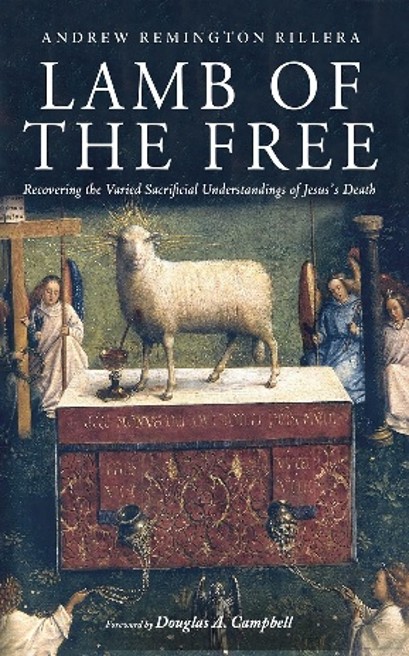
He argues that PSA is “predicated on a complete misunderstanding of the sacrificial system in the Scriptures” (emphasizing complete) because it improperly conflates all sorts of meanings into our English usage of the word “atonement”, thereby misinterpreting how atonement is accomplished and what it is for, and concludes that, “penal substitutionary atonement is left with no scriptural anchor” (Rillera, pg. 6).
A second reason why we should consider the possibility that there is something deeper than our modern evangelical understanding of the atonement is that it focuses almost exclusively on Jesus’ death. If Jesus died to pay the penalty for our sins, then His resurrection was only of secondary importance, as if to just prove His other claims. But as important as Christ’s death is to our salvation, Scripture describes the resurrection as the real crux of our redemption. Paul writes, “if Christ has not been raised, your faith is worthless; you are still in your sins” (1Co 15:17), which could hardly be true if it is really Christ’s death that saves us. Scripture is also clear that it wasn’t just Christ’s death that was important, but His suffering:
Luke 24:46 NAS He said to them, “Thus it is written, that the Christ should suffer …”
Again, if all that mattered was Christ’s death, why did He even need to suffer? Why did God not ordain for His own Son a more merciful death—like the Passover Lambs and other sacrifices whose throats were very carefully cut to make their deaths as painless as possible? The early church also believed that the incarnation of Christ as a man was also an important part of our redemption, as are all of His teachings.
A third reason why I have come to believe that our substitutionary understanding of the gospel is missing the deeper reality is that it tends to diminish sin in our lives so that we do not take it as seriously as Scripture indicates we should. The heart of our salvation is salvation from sin: “And she will bear a Son; and you shall call His name Jesus, for it is He who will save His people from their sins.” (Mat 1:21 NAS). With whatever eloquence or sophisticated arguments the devil may use to convince us otherwise, if we are not being saved from our sins, then we are not being saved. But how much sin do we knowingly tolerate in our lives because we suppose that it really doesn’t matter now, because when we die we will magically be changed in the twinkling of an eye into an entirely different person from who we really are, from whom our life choices have made us to be? Is that what Scripture actually teaches? Although glorified, was the resurrected Jesus someone entirely different from who He was as a mortal man? How often have we justified our sin by the notion that the blood of Christ covers it anyway, that all of our sins, past, present and future, are forgiven, having been nailed to the cross? (If you carefully study Colossians 2:13-14 and its parallel passage in Ephesians 2:13-15 you will discover it was something else nailed to the cross.) Is it really true then that Christ’s blood atones by simply covering our sin, sweeping it under the rug, so that God no longer sees it as if it isn’t really there, but just sees Christ’s righteousness instead?
Atonement in Our English Bibles
Our misunderstanding of the atonement actually goes back to the time of the Reformation when William Tyndale was translating the Bible into English. To get at the idea of the sort of reconciliation that God was accomplishing with men through Christ he coined the term “at-one-ment”, that became our word atonement. The word signifies man becoming at-one with God from his estrangement by sin, which can only happen through true repentance from his rebel nature to a full submission of his own will to that of the Father, as intended in God’s original creation, and as demonstrated by the life of Christ. Unfortunately, when Tyndale translated the Old Testament, he didn’t know what the Hebrew word kippur, as in Yom Kippur, meant. But reading the current Reformation understanding of Christ’s sacrifice back into the Old Testament sacrificial system, he supposed that the Levitical sacrifices were, like Christ’s, a means of atonement, and so translated kippur as such, with the result that over time, the meaning of atonement shifted from being at-one with God because we have been brought back into submission to His will, to making satisfaction or paying a penalty for a wrong or sin. For the past five hundred years our English language has misled us to believe that at-one-ment comes from God forgiving our sins on the basis of the shedding of blood. But that isn’t what kippur was about at all.
Although there is an element of at-one-ment in the meaning of kippur, it is much more nuanced that just Salvation = Atonement, Atonement = Sacrifice, therefore Salvation = Sacrifice, which has misled us to believe that forgiveness equates to the shedding of blood. Kippur means better to purge, to cleanse, to purify. God’s promise was to dwell among His people. But how could a holy, immortal God who is Spirit dwell in the midst of mortals who, even apart from their sinful rebellion, are at their very best separated from Him by their fleshly frame and finitude that associate them more with the realm of death than with Him whose very essence is life? As mortals, they must be born, or the race would die out. They have skin diseases and other maladies that render them unclean. They poop. They have various discharges. They get sick. They die. They are driven by emotion and animal instincts, have sour attitudes, and lack faith to see past their temporal mortal lives. All of these things were perceived as a miasma of death constantly defiling the holy space of God’s presence, so that if He was to remain among them, His space needed constantly to be cleansed and their fellowship with Him renewed. How was that done? With the blood of a sacrifice. But it was not the death of the sacrifice that purged the uncleanness or made atonement—God’s altar was never to be defiled by death, but rather cleansed by the blood wherein is found the life, Lev 17:11. Because of the sacrificial ritual to procure the lifeblood, the death of the animal was actually rendered as “not-a-death”, so as to not defile the altar. The life of the creature is in the blood, and that life was regularly applied to the horns of the altar, which like a lightning rod was imagined to attract the forces of death where they could be dealt with by the application of lifeblood before building up in a way that would prevent God’s presence from continuing to dwell with them. Similarly on the Day of Atonement Purgation, lifeblood was applied to the other articles of the tabernacle to purge or cleanse all of God’s dwelling place in a sort of annual house-cleaning. Overlooking the many details, those sacrifices were then offered up in smoke as a pleasing aroma to Him, signifying the at-one-ment, the communion or fellowship between God and His people.
The “sin” offering that was made for a woman who had given birth, or a man who had had a discharge or a skin disease, or a Nazirite in whose presence someone had suddenly died, was NOT because those things were sinful, but because their mortal associations were defiling to God’s immortal presence and it was each person’s individual responsibility to pick up after themselves in keeping the camp ritually “clean” so that God’s presence would ever remain with them to bless them. It is like when you are walking your dog in the park and dogs do what they do, it isn’t someone else’s responsibility to follow you around with a shovel, but yours to pick up after your pet in order to keep the community clean. The sin offering was like dusting. When you dust you are removing the dust. When the ) חַטָּאתchattath( or sin offering was made, it was to purge or cleanse the fundamental separation of man from God based on their different natures. It was also for sins that were unintentional, and specifically could NOT cleanse or purge high sins that were brazenly committed, as if forgiveness could be purchased.
Numbers 15:22-31 NAS 22 ‘But when you unwittingly fail and do not observe all these commandments, which the LORD has spoken to Moses, 23 even all that the LORD has commanded you through Moses, from the day when the LORD gave commandment and onward throughout your generations, 24 then it shall be, if it is done unintentionally, without the knowledge of the congregation, that all the congregation shall offer one bull for a burnt offering, as a soothing aroma to the LORD, with its grain offering, and its libation, according to the ordinance, and one male goat for a sin offering. 25 ‘Then the priest shall make
atonement(kippur, purgation, cleansing) for all the congregation of the sons of Israel, and they shall be forgiven (pardoned, i.e., their unintentional sin would not be held against them); for it was an error, and they have brought their offering, an offering by fire to the LORD, and their sin offering before the LORD, for their error. 26 ‘So all the congregation of the sons of Israel will be forgiven, with the alien who sojourns among them, for it happened to all the people through error. 27 ‘Also if one person sins unintentionally, then he shall offer a one year old female goat for a sin offering. 28 ‘And the priest shall make atonement (kippur, purgation) before the LORD for the person who goes astray when he sins unintentionally, making atonement (kippur) for him that he may be forgiven. 29 ‘You shall have one law for him who does anything unintentionally, for him who is native among the sons of Israel and for the alien who sojourns among them. 30 ‘But the person who does anything defiantly, whether he is native or an alien, that one is blaspheming the LORD; and that person shall be cut off from among his people. 31 ‘Because he has despised the word of the LORD and has broken His commandment, that person shall be completely cut off; his guilt shall be on him.'”
High-handed, intentional, defiant sins, could NOT be atoned for or purged, cleansed, by sacrifice, but needed to be forgiven directly by God, which only happened on the basis of a demonstration of true repentance, the very thing Jesus said was the third aspect of the gospel His disciples were to preach, and as illustrated in Psalm 51 by David after his sin with Bathsheba.
Luke 24:45-48 NAS 45 Then He opened their minds to understand the Scriptures, 46 and He said to them, “Thus it is written, that the Christ should suffer and rise again from the dead the third day; 47 and that repentance for forgiveness of sins should be proclaimed in His name to all the nations, beginning from Jerusalem. 48 “You are witnesses of these things.
Psalm 51:1-19 NAS NAS For the choir director. A Psalm of David, when Nathan the prophet came to him, after he had gone in to Bathsheba. (I.e., this was a high-handed sin…) Be gracious to me, O God, according to Thy lovingkindness; According to the greatness of Thy compassion blot out my transgressions. 2 Wash me thoroughly from my iniquity, And cleanse me from my sin. 3 For I know my transgressions, And my sin is ever before me. 4 Against Thee, Thee only, I have sinned, And done what is evil in Thy sight, So that Thou art justified when Thou dost speak, And blameless when Thou dost judge. 5 Behold, I was brought forth in iniquity, And in sin my mother conceived me. 6 Behold, Thou dost desire truth in the innermost being, And in the hidden part Thou wilt make me know wisdom. 7 Purify me with hyssop, and I shall be clean; Wash me, and I shall be whiter than snow. 8 Make me to hear joy and gladness, Let the bones which Thou hast broken rejoice. 9 Hide Thy face from my sins, And blot out all my iniquities. 10 Create in me a clean heart, O God, And renew a steadfast spirit within me. 11 Do not cast me away from Thy presence, And do not take Thy Holy Spirit from me. 12 Restore to me the joy of Thy salvation, And sustain me with a willing spirit. 13 Then I will teach transgressors Thy ways, And sinners will be converted to Thee. 14 Deliver me from bloodguiltiness, O God, Thou God of my salvation; Then my tongue will joyfully sing of Thy righteousness. 15 O Lord, open my lips, That my mouth may declare Thy praise. 16 For Thou dost not delight in sacrifice, otherwise I would give it; Thou art not pleased with burnt offering. 17 The sacrifices of God are a broken spirit; A broken and a contrite heart, O God, Thou wilt not despise. 18 By Thy favor do good to Zion; Build the walls of Jerusalem. 19 Then Thou wilt delight in righteous sacrifices, In burnt offering and whole burnt offering; Then young bulls will be offered on Thine altar.
A Better Understanding of the Atonement
I would therefore now like to suggest what I believe is a better understanding of the actual reality behind the gospel words that Jesus died for our sins, not that he died instead of us, but that he died ahead of us. He died and rose again to show us the way to eternal life by following Him through the portal of suffering and death, to demonstrate that by following Him we can die and not just be dead, but have the hope of the same resurrection life that the Father bestowed upon Him. The reality is that we are not going to escape death. There is nothing more certain. God spoke that in the day man ate of the forbidden fruit in exercise of His own will contrary to that of the Father, he would surely die. We have all partaken of that fruit and followed our first parents in sin, and the wages of that sin is death. The issue is not if we will die. We will surely die. The issue is whether we will die in our sins by rejecting the gospel call to true repentance, or die to our sins by taking up our own cross of suffering to follow Jesus through death into eternal life.
Matthew 16:24-25 NAS 24 Then Jesus said to His disciples, “If anyone wishes to come after Me, let him deny himself, and take up his cross, and follow Me. 25 “For whoever wishes to save his life shall lose it; but whoever loses his life for My sake shall find it.
1Peter 4:1-2 NAS Therefore, since Christ has suffered in the flesh, arm yourselves also with the same purpose, because he who has suffered in the flesh has ceased from sin, 2 so as to live the rest of the time in the flesh no longer for the lusts of men, but for the will of God.
There is an old hymn, “Must Jesus bear the cross alone, and all the world go free? No, there’s a cross for everyone, and there’s a cross for me.” We all have a cross to bear. Jesus is the way and the truth and the life. His way is the way of the cross. He is the door through which we must enter in order to obtain life. Above the door it says Life, so that to enter into life we must go through the Door. But on the door it says Death, because to enter into life we must follow Him in the way of the cross. The cross is a symbol, not of Jesus’ suffering instead of us so that we don’t have to suffer, but of His suffering ahead of us as the way we can be saved from our sins through our own suffering unto death.
Romans 8:12-13 NAS 12 So then, brethren, we are under obligation, not to the flesh, to live according to the flesh– 13 for if you are living according to the flesh, you must die; but if by the Spirit you are putting to death the deeds of the body, you will live.
Three Ways We Too Must Suffer
The only way to be free from sin is to die to it. But to die means that we will suffer. In the desert wilderness, and in the Garden, Jesus suffered to resist temptation. In the same way, if we would be free from sin, we too must suffer in our flesh to resist its temptations. As every recovering addict or alcoholic knows, to say no to sin causes our flesh to suffer. When someone wrongs us, our flesh suffers when we resist the temptation to respond in anger and strike back.
This way of the cross is also like the path through the sea that the Israelites had to pass through to escape their bondage in Egypt. It was a baptism into the death of their old man, the same as we enter into when we are baptized into Christ.
Romans 6:3-4 NAS 3 Or do you not know that all of us who have been baptized into Christ Jesus have been baptized into His death? 4 Therefore we have been buried with Him through baptism into death, in order that as Christ was raised from the dead through the glory of the Father, so we too might walk in newness of life.
That baptism through the sea led to life on the other side in a land of promise for the people of God. The Egyptians, on the other hand, supposed that path would be safe for them as well. They were like so many today who imagine that they can safely pass through death with no regard for their sins. But because their hearts were in rebellion against God and not repentant to die to their sins, when they tried to pass through the waters of death they were swept away by them to destruction, and died in their sin.
But it isn’t as if we could escape suffering in this fallen world even if we were able to walk in complete righteousness without sin. Even beyond our suffering to resist temptation and cease from sin, the cross also represents the same suffering Jesus experienced, even though He did no wrong, and that we can expect from following in His footsteps. When we suffer in this way, we can be sure we are on the narrow path that leads to life.
Matthew 5:10-12 NAS 10 “Blessed are those who have been persecuted for the sake of righteousness, for theirs is the kingdom of heaven. 11 “Blessed are you when men cast insults at you, and persecute you, and say all kinds of evil against you falsely, on account of Me. 12 “Rejoice, and be glad, for your reward in heaven is great, for so they persecuted the prophets who were before you.
There is a third type of suffering that is also inevitable in this life, especially for those who would follow Jesus. It ultimately comes from the Father as discipline to those He loves to teach them the nature of the authority of His kingdom rule, under which they must learn to live since that is how life is and will be in His eternal kingdom. This kingdom rule may be summarized as glad submission to loving authority. Even about Jesus Scripture says,
Hebrews 5:8 NAS 8 Although He was a Son, He learned obedience from the things which He suffered.
God’s kingdom is rooted in His top-down authority that flows through Christ to all His Creation. In Matthew 8, Jesus commended the great faith of the centurion who understood that he was a man under authority, and who was in authority over others. Every single one of us is under some authority, but also has authority over others as well. A man is under the authority of his employer, but has authority over his wife and family. A wife is under the authority of her husband, but has authority over her children and her household. Even a child has authority over his pets or the creepy crawlies of the earth.
Although in this fallen world there is a lopsidedness towards those who suffer under another’s authority, even those in authority are not without suffering for those under them, as any husband, father, or manager quickly discovers. When exercised in accordance with kingdom principles, both glad submission and loving authority will cause us to suffer. Jesus suffered not just in glad submission to His Father, but in loving authority over His Bride the Church to sanctify her through His own blood. Paul suffered both in glad submission to Jesus, and in loving authority to bring the gospel to the Gentiles. It really doesn’t matter what position we find ourselves in this life—man or woman, husband or wife, slave or free, rich or poor, employee or employer, teacher or student, governor or governed. Each of us must learn to accept the position we find ourselves in life that God has ordained to teach us His kingdom principles: if under authority, with glad submission, and if in authority, with love.
As an aside, when you understand this principle of kingdom authority, then that half a chapter in 1Corinthians 11 we cut out of our Bibles about women covering their heads when praying or prophesying, as a symbol of the authority under which they do so, makes more sense. Only since the 1960s have western churches been unable to understand what for over 1900 years was clearly understood, and is still understood in the rest of the Christian world. It is no surprise that as the feminist movement taught women to reject God’s authority, it also taught them to reject the symbol of their submission to that authority as something unfashionable. And to be sure, there is nothing beautiful about hypocrisy, so for a woman to cover her head apart from a heart of true submission will never be beautiful to men or to God. But for a heart in submission to the creation order of God’s kingdom authority, no matter how the Spirit might direct her to cover her head, there is nothing comelier and more beautiful to men and precious in the sight of God.
Still, in this fallen world, because our flesh resists suffering if at all possible, we inevitably suffer more under imperfect authorities than those in authority suffer for those under them. To greater and lesser degrees, nations suffer under the fallen heavenly authorities that empower them, citizens suffer under their corrupt leaders, slaves suffer under their imperfect masters, employees under their imperfect employers, wives under their imperfect husbands, children under their imperfect parents. An excellent employee may suffer for refusing to engage in corrupt practices his boss thinks are necessary, but may also suffer simply because his boss is still learning a more perfect way to do things, and is under authority himself and so responsible to do something. A godly wife may suffer similarly because her husband isn’t a Christian, or isn’t everything he could be in Christ, but also because the authority God gave him over her just grates against her own sinful nature. But whatever the situation, if we would be delivered from our rebellion against God’s authority, we must learn to submit ourselves to the authorities He has ordained, along with the inevitable sufferings it brings. God’s kingdom is governed by submission to authority, and if we would find a place in it, then we must learn to live by His rule.
1 Peter 2:13-23, 3:1-6 NAS 13 Submit yourselves for the Lord’s sake to every human institution, whether to a king as the one in authority, 14 or to governors as sent by him for the punishment of evildoers and the praise of those who do right. 15 For such is the will of God that by doing right you may silence the ignorance of foolish men. 16 Act as free men, and do not use your freedom as a covering for evil, but use it as bondslaves of God. 17 Honor all men; love the brotherhood, fear God, honor the king. 18 Servants, be submissive to your masters with all respect, not only to those who are good and gentle, but also to those who are unreasonable. 19 For this finds favor, if for the sake of conscience toward God a man bears up under sorrows when suffering unjustly. 20 For what credit is there if, when you sin and are harshly treated, you endure it with patience? But if when you do what is right and suffer for it you patiently endure it, this finds favor with God. 21 For you have been called for this purpose, since Christ also suffered for you, leaving you an example for you to follow in His steps, 22 who committed no sin, nor was any deceit found in His mouth; 23 and while being reviled, He did not revile in return; while suffering, He uttered no threats, but kept entrusting Himself to Him who judges righteously…… NAS 1 Peter 3:1 In the same way, you wives, be submissive to your own husbands so that even if any of them are disobedient to the word, they may be won without a word by the behavior of their wives, 2 as they observe your chaste and respectful behavior. 3 And let not your adornment be merely external– braiding the hair, and wearing gold jewelry, or putting on dresses; 4 but let it be the hidden person of the heart, with the imperishable quality of a gentle and quiet spirit, which is precious in the sight of God. 5 For in this way in former times the holy women also, who hoped in God, used to adorn themselves, being submissive to their own husbands. 6 Thus Sarah obeyed Abraham, calling him lord, and you have become her children if you do what is right without being frightened by any fear.
Summary
To summarize, atonement means at-one-ment. Our more modern English word that describes it is reconciliation. God was in Christ reconciling the world to Himself, not counting their trespasses against them (2 Co 5:18). The nature of that at-one-ment or reconciliation is not about changing God’s heart toward us by the appeasement of a sacrifice. Rather, it is about changing our heart towards God by saving us from our sins, delivering us from the rebellion of our own self-will to bring us back into alignment with His kingdom rule, where His will is done, not our own. God is not so small and petty as to be unable to forgive without the satisfaction of a penalty paid for by a blood sacrifice. By nature, He is gracious and forgiving to all who turn to Him in true repentance. But our hearts are deceitful about letting go of sin so easily, while He is an immovable Rock, and has eyes that see the real intentions of our heart. He doesn’t change, and He cannot change, because He is God. If we are to become at-one with Him so as to be saved, it is we who must be changed from the rebellion of our own self-will and what we think is right to His will as revealed throughout the Bible that in faith we know is right. The gospel is that when we come to Him under these circumstances with a repentant heart, His arms are wide open, like the father of the prodigal son, to receive us.
How does that forgiveness happen? Christ died for our sins. But the sense in which He died for our sins was not by simply dying in our place, as if we could escape the inevitable consequences of sin. Rather, it was by becoming a man, living a life in submission to the will of the Father, suffering death, and being raised from the dead to show us the way to life through death. Unlike us, death could not hold Him because of the life that He lived. By being born again of His Spirit, following Him in the way of the cross, subjecting ourselves to the will of the Father and suffering in the flesh to cease from sin, we have the hope of His promise that He will also raise us from the dead. In this way we are delivered from our sins. That is the deeper, underlying reality that the words of Scripture communicate. To understand that He died in our place as a substitutionary atonement to pay the price or penalty for our sins is like understanding the man taking a swing in front of two masked men was about a crime scene instead of a baseball game. That teaching only dates back to the Reformation, not to the early Church. But because the Reformation was hugely influential in the history of Western Civilization, its doctrines have come to permeate our understanding of the gospel to such an extent that its inherent bias and presuppositions have subtly influenced our understanding of the language and even the translations of our English Bibles, making it extremely difficult to see past our mistaken understanding of the deeper underlying truth.
The underlying reality is not that Jesus died instead of us, but that He died ahead of us. It was through the power of death that the devil enslaved mankind, and it was by becoming a man to suffer death and then be resurrected from the dead that Jesus disarmed the strong man by nullifying the power of death. Instead of serving the world, the flesh and the devil to preserve our lives, we can now serve God even unto death knowing that through Christ we can pass through death into eternal life. Jesus’ resurrection from the dead gives us hope that our death will not just leave us dead, but in fact is the very means by which we must enter into life.
Hebrews 2:14-15 NAS 14 Since then the children share in flesh and blood, He Himself likewise also partook of the same, that through death He might render powerless him who had the power of death, that is, the devil; 15 and might deliver those who through fear of death were subject to slavery all their lives.
God’s declaration that in the day man sinned he would die did not mean that in the day he sinned God would have to punish him with death to satisfy His justice; it was a statement that the self-will spawned in man’s heart through His rebellion would like a poison separate him from the love of His Creator who is the source of his life. The only way to escape that poison of his own self will was to die to it. But after the fact, deceived and separated from the love of God that could lead him through it, he could only fear death, and so unwittingly, but powerlessly as a slave, serve the devil in order to preserve his life. It is through Jesus’ suffering and death, but all importantly through His resurrection, that we too can suffer in the flesh, even unto death, in hope that just as the Father raised Jesus, He will also raise us with Jesus, so that instead of dying in our sins unto destruction, we can die to our sins unto eternal life.
But dying means suffering, and suffer we will in this life if we would be set free from sin and enter into eternal life. We must suffer in the flesh to cease from sin; that is true repentance. And to the extent that we truly follow Christ in the paths of righteousness we will also suffer the same persecutions that He received. The world hated Him, and it will hate us as well. As we enter into His kingdom and come back under His kingdom authority, we will also suffer from the imperfect exercise of that authority in this present age. John writes that we should not imagine that we can love God, whom we cannot see, without loving our neighbor whom we can see. Neither should we imagine that we are in submission to God if we are not in submission to the authorities He has established.
What does this deeper understanding of gospel atonement mean to us practically? If we have come to the Lord in true repentance and are walking with Him in a sincere, love-faith relationship, and becoming obedient to His will as His Spirit reveals it to us, not much. But if we are not taking sin seriously, and are not sincerely repentant, supposing our sins really don’t matter and that we will pass safely through death because Jesus died in our place, then we need to fear.
Galatians 6:7-8 NAS 7 Do not be deceived, God is not mocked; for whatever a man sows, this he will also reap. 8 For the one who sows to his own flesh shall from the flesh reap corruption, but the one who sows to the Spirit shall from the Spirit reap eternal life.
God tests the thoughts and intentions of our hearts. Whatever we might outwardly profess, if our hearts are secretly in rebellion, He will give us over through the deceits of our own heart to believe a lie.
2 Thessalonians 2:9-12 NAS 9 [The coming of the lawless one ] is in accord with the activity of Satan, with all power and signs and false wonders, 10 and with all the deception of wickedness for those who perish, because they did not receive the love of the truth so as to be saved. 11 And for this reason God will send upon them a deluding influence so that they might believe what is false, 12 in order that they all may be judged who did not believe the truth, but took pleasure in wickedness.
In short, Christ died for our sins, to deliver us from our sins. To save us from dying in our sins, He came to show us the way through death, so that by following Him in the way of the cross we could die to sin and enter into eternal life.
Question: What about Hebrews 9:22?
Hebrews 9:22 NAS 22 And according to the Law, one may almost say, all things are cleansed with blood, and without shedding of blood there is no forgiveness (ἄφεσις).
Penal Substitutionary Atonement has taught us to understand this verse to mean that unless Jesus died as a perfect sacrifice we could not be forgiven. But the primary meaning of the word for forgiveness means release from bondage or imprisonment, as Jesus applied it to His mission when He first began His ministry.
Luke 4:18 NAS “The Spirit of the Lord is upon Me, Because He anointed Me to preach the gospel to the poor. He has sent Me to proclaim release (ἄφεσις) to the captives, And recovery of sight to the blind, To set free (ἄφεσις) those who are downtrodden.
Forgiveness for sin equates directly to release or deliverance from the bondage of sin, and that comes not just from Christ shedding His blood for us upon His cross to save us from our sins, but by us taking up our own cross to follow Him in a crucified life until the day when our own death sets us completely free from its bondage. To be reconciled to God, to be at-one with Him, is to be set free from sin, and to be set from sin we too must pass through death. Again, this is exactly what our Christian baptism into Christ represents. As the author of Hebrews continues to his readers who were in danger of falling away because of the suffering they were beginning to experience,
Hebrews 12:4 NAS 4 You have not yet resisted to the point of shedding blood in your striving against sin.
If we are not willing to take up our own cross to follow Jesus in our striving against sin, i.e., to die to our sins, then there can be no release, no remission (KJV), no forgiveness (NAS).